



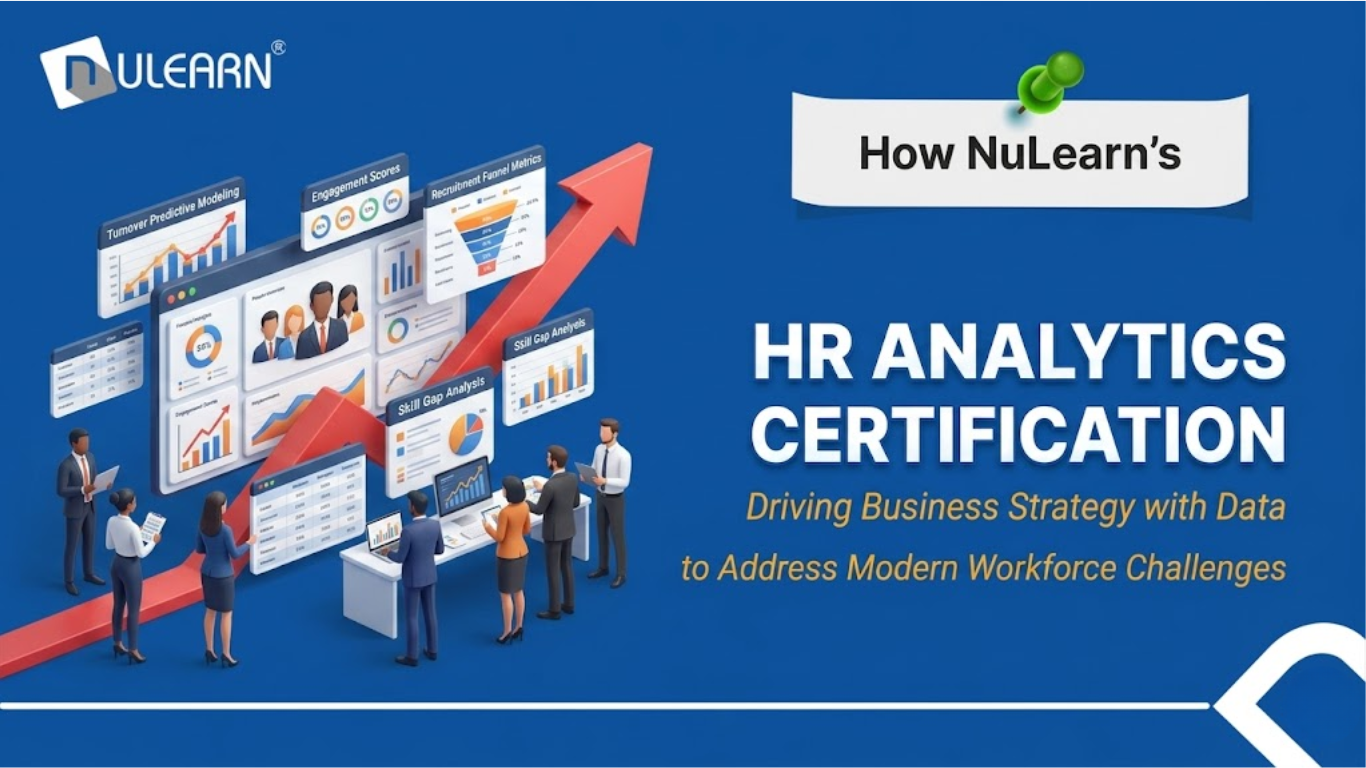
Why HR Analytics Is the Future of Human Resource Management
The responsibility of an HR manager is no longer limited to routine HR tasks of talent acquisition, payroll administration, leave tracking, and performance management. HR management today works on a people-first strategy; it performs tasks that are analytical and need scrutiny on organizational performance, risk, and long-term sustainability.
According to a Deloitte survey, companies that effectively implement business-focused talent analytics can —
-
Improve employee engagement
-
Increase revenue
-
Improve business performance through better people decisions
So, strategic HR management is changing the game for HR professionals and managers. Most organizations are adopting strategic HR tools such as talent management software, L&D platforms, balanced scorecards, and 360-degree feedback tools. These help organizations raise the bar for capability and judgment. As a result, more recruiters and hiring managers are prioritizing HR analytics certification for managers and HR executives.
A certification course in HR analytics has been designed keeping in mind the future needs of management, where data plays a critical role. Numbers are used to understand trends, spot repeated patterns in performance, and even predict future outcomes in the business. Thus, most HR professionals choose people analytics course to upskill their careers in HR management. Such a course not only opens doors for new career opportunities and offers a salary hike but also helps in smooth career transitions.
Let’s understand in detail why HR analytics is the future of human resource management and why a people analytics course matters for HR job roles.
Why Does Strategic HR Management Matter Most in Organizations?
One thing to understand about strategic HR management is that it has drastically transformed the way human resources are perceived in the organizations. From merely an administrative expense to a primary driver of competitive advantage.
Today, HR analytics plays a vital role for overall business success and outperforming competitors. Here are the key reasons why strategic HR management matters most in businesses —
-
Strategic Alignment – This gives direction to the organization and aligns it to its core business goals. It ensures that every hire and training program supports the company’s long-term objectives and growth plans.
-
Agility and Innovation—It prepares the workforce for competitive growth and innovation. HR analytics and strategy management predict future skill demands and navigate the workforce towards new strategy building, technological advancements, and structural changes.
-
Optimized Talent Acquisition and Retention — To avoid high turnover, organizations are using HR analytics to attract top-tier talent and high performers in the organization. Predictive analytics plays a huge role in filtering candidates who have the knowledge, intent, and skills to stay in the company for long periods of time.
-
Maximized ROI—Investments in learning and development yield higher returns because training targets strategically the candidates who hold leadership positions and are responsible for driving change in the organization. HR analytics focuses on capability gaps rather than generic skills and helps in maximizing the ROI.
-
Enhanced Profitability — HR analytics spots business opportunities, patterns, and employee behaviors that directly benefit the growth of the organization. This elevates performance metrics and boosts the profitability of the organization.
What are the Benefits of an HR Analytics Certification?
With an HR analytics certification, an HR professional can learn that there’s no place for intuition or guesswork. Data drives everything. Employee data is practically fetched to understand patterns, drive conclusions, and build strategies that realign organizations with better performance and higher profits.
Here are the benefits of an HR analytics course —
-
Improved Employee Retention—HR analytics is very useful for identifying patterns and employee behavior. It analyzes employee engagement and exit interviews and finds out the real reasons for employee turnover.
-
Enhanced Earning Potential—HR professionals specializing in an HR analytics certification can earn nearly 20-40% more than the non-certification holders. This shows the growing demand for people analytics course.
-
Skill Gap Identification — It teaches professionals how to identify skill gaps so that HR managers can understand where the company needs upskilling and target learning programs effectively.
-
Data-Driven Decision Making—A people analytics course equips HR professionals and managers with data-driven decision-making skills. Organizations use descriptive, predictive, and prescriptive analytics to make concrete decisions regarding performance measurement, talent hiring, and business outcomes.
-
Competitive Advantage—With strategic HR analytics, professionals learn advanced technical skills and HR analytics tools such as Python, Power BI, Tableau, and Excel to stay ahead of the competition in the market.
Key Highlights of IIM Ranchi Advanced HRM and Strategic Analytics Program
A certification in HR analytics is an executive e-learning program for working professionals that helps them excel in strategic HR management. The rise of a data-driven approach and the impact it holds over HR and its processes have resulted in professionals choosing a people analytics course for HR skill upgradation.
Among the best HR analytics courses online, the executive development program in strategic HR management from IIM Ranchi stands out. The course is specifically tailored for working professionals who want to balance their study as well as full-time jobs.
Key highlights of IIM Ranchi's advanced HRM and strategic analytics program —
-
PG Certification from IIM Ranchi—On successful completion of the program, participants will receive an IIM certification, which will add brand value to their portfolio and boost credibility.
-
IIM Ranchi Alumni Status—Executive alumni status will be provided to the participants to help them with professional networking and global community building.
-
Weekend Online and Interactive Classes—Online classes are held on the weekends so that participants can continue their work and continue studying at the same time.
-
India’s Top Faculty Panel—Participants learn from some of the best IIM faculty members and industry experts who are highly qualified and experienced in the field of HRM.
-
360-Degree Approach to HR Functions—The people analytics course provides an end-to-end understanding of HR functions such as talent acquisition strategy, employee engagement, performance analytics, and training development.
-
Insights to Advanced HR and Strategic Analytics—The HR analytics course from IIM Ranchi gives a complete hands-on learning experience with practical tools such as case studies, online business simulations, group discussions, and capstone projects.
-
Use of Strategic Tools like SPSS and Python—HR professionals learn the use of strategic HR tools such as SPSS, Python, Tableau, Excel etc.
-
Campus Visit—The program features a 3-day mandatory on-campus learning experience at the end of the program. This gives participants the opportunity to interact with mentors and peers and also take part in campus activities like events and seminars.
Career Opportunities after Strategic HR Management Course
A career in strategic HR management can be very rewarding for working professionals. An HR analytics course can help in opening career opportunities, stepping up into higher salaries, and transitioning to data-driven roles more seamlessly.
A strategic HR management course is ideal for HR managers in multinationals, Indian business firms, public sector enterprises, start-ups, and entrepreneurial ventures. After earning the HR analytics certification, professionals can position themselves in leadership, strategic, and data-driven roles.
Here are the top careers opportunities after the HR analytics certification—
|
Job Role in HR Management |
What is the Role |
Annual Salary Up to (Approx.) |
|
Human Resource Officer |
An HR officer is in charge of developing, advising, and implementing policies regarding efficient use of employees. |
INR 31.1 LPA |
|
Training and Development Officer |
The responsibility of a training officer is to tailor learning programs for employees to bridge their skill gap and enhance performance. |
INR 12.6 LPA |
|
Talent Acquisition Strategist |
A talent acquisition strategist is all about overviewing the talent hiring process in the company. A professional in such a role identifies the skills most needed by the organization and recruits talent accordingly. |
INR 27.3 LPA |
|
Compensation and Benefits Analyst |
A compensation and benefits analyst is the one in charge of designing the salary and structuring the benefits for the employees. |
INR 28.8 LPA |
|
Employee Relations Manager |
The role of an employee relations manager is to resolve internal conflicts between employees and the organization. Addressing employee grievances and conducting exit interviews all come under employee relations manager. |
INR 52.7 LPA |
Takeaway
As the HR field evolves, many mid-level and senior HR professionals are choosing advanced HR management certifications to stay updated, improve their workplace performance, and prepare for leadership roles. An online HR analytics course not only helps experienced HR professionals upgrade their skills but also opens doors to better salaries, leadership opportunities, and wider career growth.
So, if you are looking to build strong HR leadership and analytics skills, the IIM Ranchi HR Data Analytics program can be a valuable choice. Enroll today and take a step toward becoming a certified HR analytics professional.


